

Total products
0
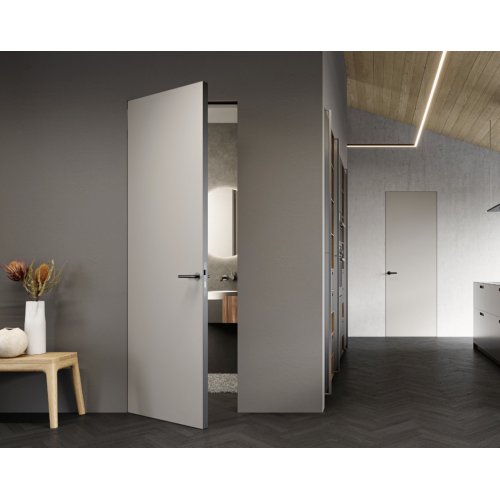
Hörmann Reverse-Opening Interior Door Element
Price:
$ 1,750
Hörmann Reverse-Opening Interior Door Element
The Hörmann Reverse-Opening Interior Door Element is a wooden interior door designed to swing through its frame into the adjoining room. With the door closed, its hallway side sits almost flush with the surrounding wall, giving the opening a restrained outline from the corridor. Hörmann pairs this reverse swing with a purpose-built wooden wrap-around frame and offset casing trims, so the frame geometry is part of the design rather than an interchangeable detail. The reference trims are 80 mm wide. The arrangement is useful to consider wherever the direction of swing affects how a doorway relates to the adjacent wall, furniture, or circulation route: plan which room receives the open leaf, how the person approaches it, and how much wall return is available for the frame and trim. It is a coordinated interior door element, not simply a slab hung to open the opposite way. The restrained hallway view comes from the relationship among the leaf, frame and offset casing; it should not be read as the door disappearing into the wall.
Reverse Swing, Concealed Hardware and Sizing
The manufacturer reference describes a 46 mm leaf with concealed hinges, a magnetic latch and an opening limiter. Together with the special frame, those parts define the reverse-opening system: the hinges are concealed in the closed-door view, the latch is magnetic, and the limiter is a distinct opening-control component. When planning the doorway, first settle the swing into the adjoining room and hinge side, then coordinate the frame and trim with the wall layout. Hörmann lists a maximum leaf size of 2209 mm high by 1057 mm wide; these are leaf dimensions, not the building opening. The catalog also gives building-dimension references with widths from 625 to 1125 mm and heights from 1875 to 2250 mm. Keep that BRB/BRH building-size basis separate from the maximum leaf dimensions when comparing the door with an existing opening. A practical specification should bring together the wall opening, intended frame, handing, direction of swing and finish so the selected reverse-opening element suits the route through both rooms. Also check the trim return on both faces of the wall and the space the open leaf occupies in the receiving room; a reverse swing changes the side of the threshold where that movement happens. Mark the hinge side and open position on the plan before comparing the catalog building dimensions with the site opening. This makes the frame, route and casing part of one coherent interior-door decision. The catalog describes the family arrangement; the Europrestige listing does not name a chosen size, hinge side, finish or option set.
Manufacturer Reference Specifications
| Specification | Manufacturer reference |
|---|---|
| Product type | Reverse-opening wooden interior door element |
| Door leaf thickness | 46 mm |
| Maximum leaf size | 2209 mm high × 1057 mm wide |
| Building dimensions | 625–1125 mm wide; 1875–2250 mm high |
| Described hardware | Concealed hinges, magnetic latch, opening limiter |
| Frame detail | Wooden wrap-around frame; offset 80 mm casing trims |
Reviews
5
1 review
5
1
4
0
3
0
2
0
1
0